
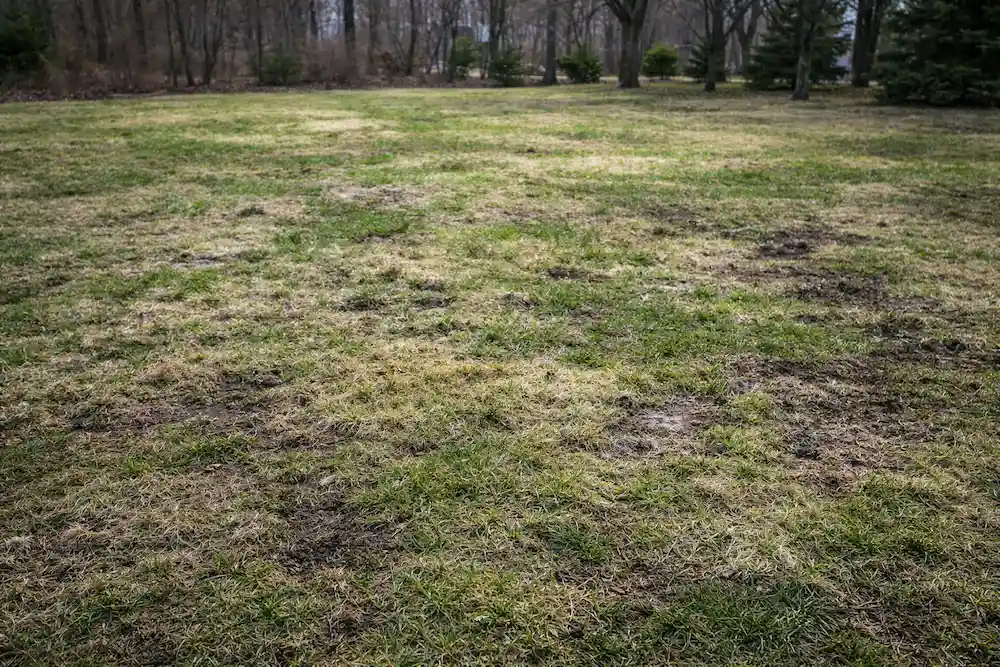
If your lawn looks thin, patchy, or dull green when the snow melts in West Michigan, you're not alone. Long winters, snow cover, frozen soil, and fluctuating temperatures can leave lawns looking rough in early spring.
The good news is that most winter lawn damage is temporary. With the right care in early spring, your grass can recover quickly and grow back thick and healthy.
Here are the most common reasons lawns struggle after a West Michigan winter and what you can do to fix them.
Winter Stress on Cool-Season Grass
Most lawns in Michigan are made up of cool-season grasses like Kentucky Bluegrass, Perennial Ryegrass, and Tall Fescue. While these grasses are built to survive cold winters, they can still experience stress from months of snow cover and frozen soil.
During winter, grass stops growing and enters dormancy. By spring, it often looks pale, matted, or uneven until growth resumes.
Once temperatures warm and sunlight increases, most lawns begin recovering naturally.
Snow Mold and Matted Grass
One common issue in early spring is snow mold, which can leave gray or pink patches on the lawn.
Even without snow mold, grass may appear flattened or matted down after months under snow.
A light spring raking can help lift the grass blades, improve airflow, and encourage new growth.
Soil Compaction from Winter Conditions
Freeze-thaw cycles and heavy snowpack can compact the soil over winter. When soil becomes compacted, it restricts oxygen, water, and nutrients from reaching the roots.
Compacted soil often leads to thin turf and slow spring recovery.
Aeration later in the season can help relieve compaction and improve lawn health.
Nutrient Depletion
By spring, many lawns are low on nutrients after months of dormancy.
Applying a balanced spring fertilizer can help jumpstart growth and restore deep green color. Fertilizer provides essential nutrients that support stronger roots and thicker turf as the lawn comes out of winter dormancy.
Early spring feeding is one of the most effective ways to revive a tired lawn.
Uneven Growth in Early Spring
It's also normal for lawns to green up unevenly at first. Some areas receive more sunlight or warm up faster than others.
As temperatures stabilize and mowing begins, the lawn typically evens out.
Regular mowing helps encourage thicker growth and improves the overall appearance of the lawn.
How Professional Lawn Care Helps Your Lawn Recover Faster
While many lawns eventually recover on their own, professional maintenance can speed up the process and improve the final results.
Consistent mowing, proper mowing height, and seasonal fertilization all help strengthen the turf as it comes out of winter dormancy.
At Lake Effect Lawn & Landscaping, we provide professional weekly mowing that helps West Michigan lawns grow thicker, healthier, and better looking throughout the season.
Our service includes:
• Precision mowing
• Clean string trimming
• Crisp sidewalk edging
• Thorough cleanup of hard surfaces
With consistent professional maintenance, your lawn can recover faster and look its best all season long.
Final Thoughts
It's completely normal for lawns in West Michigan to look rough after winter. Snow cover, cold temperatures, and months of dormancy all take a toll on turf.
Fortunately, with proper spring care, most lawns recover quickly.
A combination of light raking, proper mowing, and spring fertilization can help restore color, density, and overall lawn health.